Friday, April 22, 2011

Alt Attribute & Seo

SEO Optimization images has become increasingly more important in SEO (Search Engine Optimization) for websites. The ALT attribute is a critical step that is sometimes forgotten. This can be a lost opportunity for better rankings.


In Google's webmaster guidelines, they advise the use of alternative text for the images in your site:

Images:. Use the alt attribute to provide descriptive text. Additionally, we recommend utilizing a human-readable caption and descriptive text around the image.

Why would they ask us to do that? The answer is simple, really; search engines have the same problem as blind users. They cannot begin to see the images.

Many webmasters and inexperienced or unethical SEOs abuse the use of this attribute, trying to stuff it with keywords, hoping to achieve a particular keyword density, which is not as relevant for rankings now as it was previously.

On the other hand, high keyword density can, on some search engines, trigger spam filters, which might create a penalty for your site's ranking. Even without this type of penalty, your site's rankings will not take advantage of this tactic.
This method also puts persons who use screen readers in a greater disadvantage. Screen readers are software-based tools that really read aloud the items in what is displayed on the screen. In browsing the net, the alt features of images are read aloud as well.

Imagine listening to a paragraph of text that is then repetitions of many keywords. The page will be far from accessible, and, to put it bluntly, will be found quite annoying.
What is an Alt attribute?

An ALT attribute should not be used as a description or a label for an image, though lots of people utilize it in that fashion. Although it might seem natural to assume that alternate text is really a label or a description, it is not!

What used inside an image's alt attribute ought to be its text equivalent and convey exactly the same information or serve exactly the same purpose the image would.

The thing would be to supply the same functional information that the visual user would see. The alt attribute text should be the "stand in" in the event that the image itself is not available. Think about this question: If you were to replace the image with the text, would most users get the same basic information, and wouldn't it generate the same response?
Some examples:


Some SEO Optimization Tips

If your search button is a magnifying glass or binoculars its alt text ought to be 'search' or 'find' not 'magnifying glass' or 'binoculars'.

If the image is supposed to convey the literal contents of the look, then a description is appropriate.

If it is meant to convey data, then that information is what's appropriate.

If it is designed to convey using a function, then the function itself is what ought to be used.

Some Alt Attribute Guidelines:

Always add alt attributes to images. Alt is mandatory for accessibility and for valid XHTML.

For images that play merely a decorative role in the page, use an empty alt (i.e. alt="") or perhaps a CSS background image to ensure that reading browsers do not bother users by uttering things like "spacer image".

Keep in mind that it is the function from the image we're attempting to convey. For example; any button images shouldn't include the word "button" in the alt text. They should emphasize the action performed through the button.

Alt text should be determined by context. Exactly the same image inside a different context may need drastically different alt text.

Attempt to flow alt text with the rest from the text because that's how it is going to be read with adaptive technologies like screen readers. Someone listening to your page should hardly remember that a graphic image is there.
Please keep in mind that utilizing an alt attribute for every image is needed to satisfy the minimum WAI requirements, that are used since the benchmark for accessibility laws in UK and the remainder of Europe. They are also required to meet "Section 508" accessibility requirements in america.

It is important to categorize non-text content into three levels:

Eye-Candy
Mood-Setting
Content and Function

I. Eye-Candy

Eye-Candy are things that serve no purpose apart from to make a site visually appealing/attractive and (oftentimes) fulfill the marketing departments. There is no content value (though there might be value to a sighted user).

Never alt-ify eye-candy unless there is something there which will boost the usability from the site for someone using a non-visual user agent. Use a null alt attribute or background images in CSS for eye-candy.

II. Mood-Setting

This is actually the middle layer of graphics which might actually set the mood or set the stage as it were. These graphics are not direct content and could not be considered essential, but they're important in that they help frame what is going on.

Attempt to alt-ify the 2nd group as makes sense and is relevant. There might be instances when doing so might be annoying or detrimental with other users. Then try to avoid it.

For example; Alt text that's identical to adjacent text is unnecessary, and an irritant to screen reader users. I suggest alt="" or background CSS images in such instances. But sometimes, it's vital that you get this content inside for all users.

Usually it depends on context. Exactly the same image in a different context may need drastically different alt text. Obviously, content ought to always be fully available. How you go in this example is a judgment call.

III. Content and Function

This is when the image may be the actual content. Always alt-ify content and functional images. Title and long description attributes can also be in order.
The main reason many authors can't understand why their alt text isn't working is they don't know why the pictures are there. You have to figured out exactly what function a picture serves. Think about what it is about the image that's vital that you the page's intended audience.

Every graphic includes a reason behind being on that page: because it either enhances the theme/ mood/ atmosphere or it is advisable to what are the page is attempting to describe. Understanding what the look is perfect for makes alt text easier to write. And exercise writing them definitely helps.
A method to look into the usefulness of alternative text would be to imagine reading the page over the telephone to someone. What would you say when encountering a particular image to make the page understandable towards the listener?

Aside from the alt attribute you have a couple more tools at your disposal for images.
First, in degree of descriptiveness title is in between alt and longdesc. It adds useful information and may add flavor. The title attribute is optionally rendered by the user agent. Remember they're invisible and never shown as a "tooltip" when focus is received via the keyboard. (A lot for device independence). So use the title attribute just for advisory information.
Second, the longdesc attribute points towards the URL of a full description of an image. When the information found in an image is important towards the concept of the page (i.e. some important content would be lost when the image was removed), an extended description than the "alt" attribute can reasonably display ought to be used. It may provide for rich, expressive documentation of the visual image.

It should be used when alt and title are insufficient to embody the visual qualities of the image. As Clark [1] states, "A longdesc is a long description of the image...The goal is by using any period of description necessary to impart the facts of the graphic.

It would not be remiss to hope that the long description conjures an image - the look - in the mind's eye, an analogy that holds true even for that totally blind."

Although the alt attribute is mandatory for web accessibility as well as for valid (X)HTML, not every images need alternative text, long descriptions, or titles.

Oftentimes, you are best just going with your gut instinct -- if it's not necessary to include it, and if you don't possess a strong urge to get it done, don't include that longdesc.

However, if it's necessary for the whole page to operate, then you have to add the alt text (or title or longdesc).

What's necessary and what's not depends a great deal on the function of the image and its context on the page.

Exactly the same image may need alt text (or title or longdesc) in one spot, but not in another. If the image provides absolutely no content or functional information alt="" or background CSS images may be appropriate to make use of. However, if the image provides content or adds functional information an alt would be required and perhaps even a long description will be so as. In many cases this kind of thing is really a judgement call.

Image Search Engine Optimization Tips


Listed here are key stages in optimizing images:

Select a logical file name that reinforces the keywords. You can use hyphens within the file name to isolate the keyword, but avoid to exceeding two hyphens. Stay away from underscores like a word separator, such as "brilliant-diamonds.jpg";

Label the file extension. For example, if the image search engine sees a ".jpg" (JPEG) file extension, it's going to assume that the file is a photo, and when it sees a ".gif" (GIF) file extension, it's going to assume that it is a graphic;

Ensure that the text at the image that's highly relevant to that image.
Again, don't lose an excellent opportunity to help your site together with your images in search engines. Begin using these steps to rank better on all the engines and drive increased traffic to your site TODAY.

Thursday, April 21, 2011

Search Engine Optimization


The following is part of a multiple part series covering image optimization techniques. This article is intended for beginners through intermediate SEO’s; if this doesn’t pertain to you, you may want to skim as most of this will probably be review material for you.


Some of the big questions many people ask are why would they even want to perform image optimization? Doesn’t it just help people who want to steal or hotlink images? And is there really any meaningful traffic or links that you can get from image optimization? IMHO the answer is yes. Let’s say someone is going on a trip to Italy. They might do image searches for things to do or see in Italy and for famous Italian landmarks like the Leaning Tower of Piza, the Trevi Fountain, or St. Peter’s Basilica. Thanks to Google’s universal search results, images provide a way to get onto the first page (or, in some cases, the top result) and get a click through, an ad view, or adsense impression. It might even get a lead generation completion. Maybe you run a fish store. If a university professor or government agency needs a picture of a fish and your image result appears, and you allow your images to be reused in exchange for a link, this can be huge way to passively build links slowly over time (true story! It happened for a client I used to have). Now that we’ve got the why out of the way, let’s talk about the “how” of image optimization.


Filenames


This is one of the most basic elements of image optimization. If you have an image of blue widgets, I would name your image “blue-widgets.jpg” or “blue-widgets.gif”. You can use other formats like PNG, but I have gotten better results with “jpg” and “gif” files. You can use other characters like underscore as word delimiters, but I get better results with hyphens. You can run the words together if they are separate in other factors. I have found stemming plays a role (ie widget vs widgets), but you can get around it using other factors. I haven’t seen capitalization play a role, but I prefer to use all lower case because I usually use Apache servers and case sensitivity matters. If you are going to have multiple images of the same object-type, I suggest adding a “-1″, “-2″ onto the end.


Now, before the hate mail or hate tweets start, it is entirely possible to have an image rank without the keywords being in the file name–IF there are enough other factors in place. However, you should ask yourself why would you give up a chance to give a search engine a signal about what an image is about? If you work on a large ecommerce platform or other large database application, chances are good that your gold diamond earrings will have an image file name like “GDX347294.jpg” that corresponds to the item’s SKU or other internal classifier. So, yes, you will have to sacrifice the keyword for business reasons.


ALT Text


Let’s get the basic information out of the way: ALT text was designed for screen readers or visually-impaired people to know what they weren’t seeing. Your goal is to use it to satisfy the screen readers while being keyword focused enough for the search engines and without being a keyword stuffing spammer. Here’s an example of ALT text variations:


Keyword stuffed: discount hotel room paris france


ALT text only: Eiffel Tower


SEO optimized: Eiffel Tower from Louvre Bons Enfants hotel room


Striving to find a balance between pleasing the search engines and text readers can be a juggling act. If you are risky with some of your other SEO techniques, I’d play this on the safe side.


Headings and Bold Text


If image optimization for a particular image is important, I really like to optimize the image with bold or a heading tag of the term I’m chasing right above the image. I’ve found this really helps give a strong signal to the engines


The following is part of a multiple part series covering image optimization techniques. This article is intended for beginners through intermediate SEO’s; if this doesn’t pertain to you, you may want to skim as most of this will probably be review material for you.


Some of the big questions many people ask are why would they even want to perform image optimization? Doesn’t it just help people who want to steal or hotlink images? And is there really any meaningful traffic or links that you can get from image optimization? IMHO the answer is yes. Let’s say someone is going on a trip to Italy. They might do image searches for things to do or see in Italy and for famous Italian landmarks like the Leaning Tower of Piza, the Trevi Fountain, or St. Peter’s Basilica. Thanks to Google’s universal search results, images provide a way to get onto the first page (or, in some cases, the top result) and get a click through, an ad view, or adsense impression. It might even get a lead generation completion. Maybe you run a fish store. If a university professor or government agency needs a picture of a fish and your image result appears, and you allow your images to be reused in exchange for a link, this can be huge way to passively build links slowly over time (true story! It happened for a client I used to have). Now that we’ve got the why out of the way, let’s talk about the “how” of image optimization.


Filenames


This is one of the most basic elements of image optimization. If you have an image of blue widgets, I would name your image “blue-widgets.jpg” or “blue-widgets.gif”. You can use other formats like PNG, but I have gotten better results with “jpg” and “gif” files. You can use other characters like underscore as word delimiters, but I get better results with hyphens. You can run the words together if they are separate in other factors. I have found stemming plays a role (ie widget vs widgets), but you can get around it using other factors. I haven’t seen capitalization play a role, but I prefer to use all lower case because I usually use Apache servers and case sensitivity matters. If you are going to have multiple images of the same object-type, I suggest adding a “-1″, “-2″ onto the end.


Now, before the hate mail or hate tweets start, it is entirely possible to have an image rank without the keywords being in the file name–IF there are enough other factors in place. However, you should ask yourself why would you give up a chance to give a search engine a signal about what an image is about? If you work on a large ecommerce platform or other large database application, chances are good that your gold diamond earrings will have an image file name like “GDX347294.jpg” that corresponds to the item’s SKU or other internal classifier. So, yes, you will have to sacrifice the keyword for business reasons.


ALT Text


Let’s get the basic information out of the way: ALT text was designed for screen readers or visually-impaired people to know what they weren’t seeing. Your goal is to use it to satisfy the screen readers while being keyword focused enough for the search engines and without being a keyword stuffing spammer. Here’s an example of ALT text variations:


Keyword stuffed: discount hotel room paris france


ALT text only: Eiffel Tower


SEO optimized: Eiffel Tower from Louvre Bons Enfants hotel room


Striving to find a balance between pleasing the search engines and text readers can be a juggling act. If you are risky with some of your other SEO techniques, I’d play this on the safe side.


Headings and Bold Text


If image optimization for a particular image is important, I really like to optimize the image with bold or a heading tag of the term I’m chasing right above the image. I’ve found this really helps give a strong signal to the engines


seo optimization services


Search Engine Optimization - An OverviewSlide8 by doggy00123

Thursday, April 14, 2011

Bench Craft Company on the subject of hotels

"Getting data privacy 'right' is an economic and social imperative. Trust and confidence in the security and privacy of the critical systems of our planet - especially the digital version of its central nervous system, the Internet - is foundational to individuals' continued engagement and reliance on such things as online commerce, e-health and smart grids. If individual consumers don't feel that their privacy and security are protected, they will not support modernization efforts, even though the capabilities of technology advancements are proven and the potential benefits to society are extensive.


"Here's an example of the tensions we face: The ability of smart grids to conserve resources relies on the ability of, and commitment from, consumers to monitor and modify their individual usage. An individual using a smart meter understands the difference in the cost of using electricity at peak versus non-peak hours and could opt to lower their usage during more costly time periods. At the same time, data from the meters can reveal sensitive information such as work habits, shower schedules, use of medical devices such as dialysis, and whether or not a house is occupied."


"I don't worry that the technology will have a negative impact on consumer privacy," wrote Mark Roberti, founder of RFID Journal in a June overview of the state of the RFID market where privacy is concerned. "Instead, I worry that ignorant legislators trying to score points with uninformed voters will pass laws that limit the many benefits RFID can deliver--and that is a much bigger threat to consumers."


Today's agreement in Europe appears not to be the kind of legislation Roberti feared. As a framework focused on self-reporting it may be too little, ultimately, but it's a start.


"Getting data privacy 'right' is an economic and social imperative. Trust and confidence in the security and privacy of the critical systems of our planet - especially the digital version of its central nervous system, the Internet - is foundational to individuals' continued engagement and reliance on such things as online commerce, e-health and smart grids. If individual consumers don't feel that their privacy and security are protected, they will not support modernization efforts, even though the capabilities of technology advancements are proven and the potential benefits to society are extensive.


"Here's an example of the tensions we face: The ability of smart grids to conserve resources relies on the ability of, and commitment from, consumers to monitor and modify their individual usage. An individual using a smart meter understands the difference in the cost of using electricity at peak versus non-peak hours and could opt to lower their usage during more costly time periods. At the same time, data from the meters can reveal sensitive information such as work habits, shower schedules, use of medical devices such as dialysis, and whether or not a house is occupied."


"I don't worry that the technology will have a negative impact on consumer privacy," wrote Mark Roberti, founder of RFID Journal in a June overview of the state of the RFID market where privacy is concerned. "Instead, I worry that ignorant legislators trying to score points with uninformed voters will pass laws that limit the many benefits RFID can deliver--and that is a much bigger threat to consumers."


Today's agreement in Europe appears not to be the kind of legislation Roberti feared. As a framework focused on self-reporting it may be too little, ultimately, but it's a start.


bench craft company

Sources: Phil Jackson, Los Angeles Lakers fined $75,000 each


Lakers coach Phil Jackson has been fined $75,000 for making unauthorized comments about collective bargaining, sources said Thursday.

bench craft company

Small Business <b>News</b>: Small Biz Social Media Tips

In recent weeks we've shared articles on social media sites like Twitter, Facebook, LinkedIn and others. Now it's time to look at how all these tools are.


bench craft company

Breaking tech <b>news</b>? Get email notifications as it happens. - TNW Voice

We're in the technology news business. To that end, if it's old, it isn't news. Given that you're reading this, chances are that you live, eat, sleep and breathe the tech lifestyle and want to get the news as soon as it happens. ...


bench craft company

Apple should see a material dip, on top of the one that occurred
after I indicated that I was short the stock on March 16th. Before we
delve into my opinion, let’s peruse the news from 1 a.m. this morning:


WSJ: Apple Crunched in Nasdaq Rebalance- In
a move likely to ripple across the stock market, Nasdaq OMX plans to
announce a rare rebalancing of its Nasdaq-100 index, which will reduce
the big weighting of Apple, which currently makes up more than 20% of
the index.


Bloomberg: Apple’s Weight in Nasdaq-100 to Be Reduced as Microsoft, Cisco Are Raised


So, why do you think Nasdaq decides to reduce Apple’s weighting now?
Well, the competitive pressures that Apple faces are nigh guaranteed to
make it impossible for it to fulfill the pie in the sky expectations
that are being built for it.  That in combination with a 20% weighting
create a recipe for a guaranteed crash in the Nasdaq unless something
was done about it. Signs of heavy reliance on on or two products for 70%
of their profit, while sourcing the most important parts of those
products from their biggest competitors, were starting to show. iPad 2
supplies are tight due to Japan’s woes, and Apple does not have the
mobile computing product diversity to handle it like the 150 or so
Android competitors it is battling. This means much more than just a gap
in profits for the quarter. These companies are in race, and Apple is
being forced to give up some of its lead due to diversification issues –
issues that Android manufacturers (who are more diversified because
there are so many more of them from different places) don’t have, or at
least not to the extent that Apple does. Thus, Samsung, LG, Asus, HTC,
etc. will be rolling out to customers who may have had an Apple iPhone
or iPad.


This is also another (of many) massive triumphs of BoomBustblog
research over that of the most esteemed Godman Sachs who put a $430
price target on Apple just as it was making all time highs and in direct
contravention to BoomBustBlog’s stated logic. See Shorting Apple and Why Software Developers Can Make More Money On Android Wednesday, March 16th, 2011


I have finally started dabbling with Apple
shorts and puts. My OTM S&P put positions were profitably stopped
out due to trailings yesterday when the market recovered some of its
losses. I have decided to use Apple in the place of the S&P puts
for the time being. Medium to long term, the trade is more evident and
obvious to anyone who is objective and follows BoomBustBlog. It is
significantly more risky shorter term. Alas, there are marginal gains
already, and once they accrue to the point of indemnifying my trailing
stop, I will add more. After I finish the current leg of my global real
estate research to be disseminated to institutions, I will offer
tidbits of the modeling (I have already offered subscribers significant
info on why I think Apple is a risky long play). From a contrarian
standpoint, it may be safe to go short with tight stops, after all
although Apple Gears Up To Combat The Margin Compression That Apparently Only It, Google & Reggie Middleton Sees Coming, we still have those guys over at West Street… Goldman’s
$430 Target, Screaming Buy On Apple At Its All Time High Is In Direct
Contravention To Reggie Middleton’s Logic – Who’s Right? Well, Who
Has Been More Right In The Past? I have taken The Challenge To Goldman Sach’s Apple Proclamation One Step


Farther, Apple’s Closed System Risks
Failure! Listen, everyone, regardless of what investment positions or
tech products you may have in your stable, needs to ask themselves the
appropriate “What if’s”. I have spurred the conversation with “Will Google Win The Mobile Computing War? Let’s Walk Through Where They Stand Now & How To Value Them”


Remember, I may not always be right, but it does pay to look at the track record…  Did Reggie Middleton, a Blogger at BoomBustBlog, Best Wall Streets Best of the Best? More attention should be paid to the little guy, after all by now it is Now Common Knowledge That Goldman’s Investment Advice Sucks!
Didn’t you get the memo? I’m sure many traders have spurned Apple due
to the Japanese market being cut off right at the launch of the iPad 2,
but the issues go deeper than that. I will cover it in depth at a later
date, though.


Additional thoughts on the Apple short:


  1. Note For The Few Realistic Apple Bears… Wednesday, March 16th, 2011
  2. Buffet on Apple – Common Sense! Monday, March 21st, 2011
  3. Competition Heats Up In The Mobile Computing Space On Many Fronts – Prices Driven Down Once Again By The Big Players Tuesday, March 22nd, 2011
  4. How the “I Love Apple, There Is No Other Fever” Adds To The Attractiveness Of An Ever So Unpopular Apple Short Monday, March 21st, 2011

And that Research in Motion short alert
given to subscribers is working like a charm – even more so if it get’s
caught in  NASDAQ storm: Research in Motion Drops 10% After Hours, Precisely As We Warned Two Months Ago – MARGIN COMPRESSION!!! Thursday, March 24th, 2011

Apple co-founder Steve Wozniak said in an interview this week that he would consider returning to an active role at the company he helped start if asked.


During an interview in England this week, Wozniak said, "I'd consider it, yeah," when asked whether he would play a more active role if asked, Reuters reports.


Wozniak, Steve Jobs and Ronald Wayne founded Apple Computer in 1976. Wozniak left his full-time role with the company in 1987, but remains an employee and shareholder of Apple.


Since leaving Apple, Wozniak has been involved in a wide range of entrepreneurial and philanthropic endeavors. He currently serves as Chief Scientist for storage company Fusion-io.


Meanwhile, Jobs is currently taking an indefinite leave of absence to focus on his health, though he remains CEO of Apple and continues to be involved in strategic decisions.


Wozniak, who has widely been acknowledged as the technical genius behind Apple's early success, believes that he has a lot to offer the company he helped start, which went on to become the world's second-largest company in terms of market value.


"There's just an awful lot I know about Apple products and competing products that has some relevance, some meaning. They're my own feelings, though," Wozniak said during the interview.


When asked his opinion on Apple today, Wozniak praised the company for its track record with recent products. "Unbelievable," he said, "The products, one after another, quality and hits."


Even so, Wozniak admitted that he'd prefer Apple's devices to be more open, so he can "get in there and add [his] own touches." Last December, Wozniak revealed that he had purchased a DIY kit for the iPhone 4 and "modded" the device into the as-yet-unreleased white version.


"My thinking is that Apple could be more open and not lose sales," said Wozniak, while adding, "I'm sure they're making the right decisions for the right reasons for Apple."


Wozniak has been committed to openness since the beginning. In December, Wozniak told reporters that he didn't design the original Apple I to make a lot of money and had given the designs away for free after his former employer HP showed no interest in the computer.


bench craft company

bench craft company

Over the years, entrepreneurs and corporate executives have devised any number of clever ways for getting rich off the working poor, but you'd have to look long and hard to find one more diabolically inventive than the RAL. Say you have a $2,000 tax refund due and you don't want to wait a week or two for the IRS to deposit that money in your bank account. Your tax preparer would be delighted to act as the middleman for a very short-term bank loan—the RAL. You get your check that day or the next, minus various fees and interest charges, and in return sign your pending refund over to the bank. Within 15 days, the IRS wires your refund straight to the lender. It's a safe bet for the banks, but that hasn't stopped them from charging astronomical interest rates. Until this tax year, the IRS was even kind enough to let lenders know when potential borrowers were likely to have their refund garnished because they owed back taxes, say, or were behind on child support.


Hewitt didn't invent the refund anticipation loan. That distinction belongs to Ross Longfield, who dreamed up the idea in 1987 and took it to H&R Block CEO Thomas Bloch. "I'm explaining it," Longfield recalls, "but Tom is sitting there going, 'I don't know; I don't know if people are going to want to do that.'"


Tax-prep shops are as common as fast-food joints in many low-income neighborhoods—there are at least half a dozen on one three-block stretch of South Broadway in Yonkers, N.Y., where these photographs were taken. A few offer reasonably priced accounting, while others charge hundreds of dollars for 20 minutes of work. But Longfield knew. He worked for Beneficial Corp., a subprime lender specializing in small, high-interest loans for customers who needed to finance a new refrigerator or dining-room set. His instincts told him the RAL would be a big hit—as did the polling and focus groups he organized. "Everything we did suggested people would love it—love it to death," he says.


He also knew Beneficial would make a killing if he could convince tax preparers—in exchange for a cut of the proceeds—to peddle this new breed of loan on his employer's behalf. Ultimately, Longfield persuaded H&R Block to sign up. But no one was as smitten as John Hewitt—who understood that people earning $15,000 or $20,000 or $25,000 a year live in a perpetual state of financial turmoil. Hewitt began opening outposts in the inner cities, Rust Belt towns, depressed rural areas—anywhere the misery index was high. "That was the low-hanging fruit," he says. "Going into lower-income areas and delivering refunds quicker was where the opportunity was."


Customers wanting a RAL paid Jackson Hewitt a $24 application fee, a $25 processing fee, and a $2 electronic-filing fee, plus 4 percent of the loan amount. On a $2,000 refund, that meant $131 in charges—equivalent to an annual interest rate of about 170 percent—not to mention the few hundred bucks you might spend for tax preparation. "Essentially, they're charging people triple-digit interest rates to borrow their own money," says Chi Chi Wu, a staff attorney at the National Consumer Law Center.


In 1988, the first year he began offering the loans, Hewitt owned 49 stores in three states. Five years later, he had 878 stores in 37 states. And five years after that, when Cendant Corp.—the conglomerate that owned Avis, Century 21, and Days Inn—bought Jackson Hewitt for $483 million, his earliest backers received a $2 million payout on every $5,000 they'd invested. Today, with 6,000 offices scattered across the country, Jackson Hewitt is more ubiquitous than KFC, and has about as many imitators.


THERE WOULD BE NO refund anticipation loans, of course, without tax refunds. And by extension there would be no RALs without the Earned Income Tax Credit, the federal anti-poverty initiative that served as the mother's milk nourishing the instant-refund boom. Welfare reform was the catalyst for the EITC, which was aimed at putting extra cash in the pockets of low-income parents who worked. What motive does a single mother have to get a job, conservative thinkers asked, if there was scant difference between her monthly take-home pay and a welfare check? It was Richard Nixon who first floated the idea that led to the Earned Income Tax Credit; Ronald Reagan dubbed it "the best pro-family, the best job creation measure to come out of Congress." In 2007, the US Treasury paid out $49 billion to 25 million taxpayers.


Kevin’s post and David Glenn’s story are deeply troubling in so many aspects that it’s hard to pick out which ones are the worst. The popularity of the business major, the low work-demands made of students, the quirky assignments and exams . . . they add up to, well, what we get as documented in Academically Adrift.  That is, low learning outcomes, little coordination between pedagogy and outcomes, and meager effort on the part of students.


But something else in the story bears highlighting, and it might go to the heart of the problems of the business major.  In their analysis of CLA scores for undergraduates, Arum and Rooksa found that business majors score the lowest on writing-and-reasoning skills improvement while in the first two years of college.


A big problem, indeed, when set alongside another statement made by Glenn at the end of the piece: “According to national surveys, [employers] want to hire 22-year-olds who can write coherently, think creatively, and analyze quantitative data.” Note what comes first: the writing. We hear it in just about every survey I’ve seen which asks employers about problems or needs in the workplace.  They always emphasize communication skills, particularly writing skills. In sum, businesses need competent writers who draft clear prose. Not PowerPoint slides, spread sheets, or Web sites alone, but prose for reports, correspondence, agreements, white papers, etc. Not collaborative composition only, but solitary composition, too.


That’s the reality, but in Glenn’s story, I found only one case in which the examination of writing quality was emphasized, the University of Viriginia’s business school.


Why doesn’t it come up all the time?


Obviously, because writing is a labor-intensive activity for student and for professor.  Assign each student a 15-page white paper on some subject or another and the workload for everyone rises considerably. For the student, it means paying attention to punctuation, diction, transitions, and structure, not to mention pursuing one line of thought through 3,000 words. For the professor, it means grading punctuation, diction, transitions, and structure, not to mention one line of thought through 3,000 words.


It is precisely the kind of training that business majors need and employers prefer, but it looks just too darn onerous for students and for teachers. Even if students end up on the job writing more PowerPoints than long papers, the training in prose composition in school pays off.


We should guard against an assumption cited in the article that what people will do in the workplace should be replicated in the classroom.  This is to align training and the thing you will eventually do too closely.  Students should write papers that are longer than the things they will have to write in the workplace.  They should spend more time alone than they will in the workplace.  Training should always require practices that exceed the tasks that need to be handled later on.


If business school leaders wish to improve learning outcomes and raise the workplace readiness of graduates, they have a simple option: require a year-long composition course at the beginning of the major. That course should focus on prose and should minimize collaborative work.


bench craft company

Great <b>news</b>: Working population percentage drops to three-decade <b>...</b>

Great news: Working population percentage drops to three-decade low.


bench craft company


HealthLawProf Blog: MRSA <b>News</b>

TrackBack. TrackBack URL for this entry: http://www.typepad.com/services/trackback/6a00d8341bfae553ef01538dd79809970b. Listed below are links to weblogs that reference MRSA News: ...


Tuesday, April 12, 2011

Roofing Companies Vancouver - 5 Inquiries to Ask yourself

Roofing Vancouver - Faq's


1. Repair or Replace?

There's no opinion as an expert opinion. Most contractors will provide you with a totally free estimate. Get a list of a couple trusted contractors and phone them well ahead of time of when you want to get your homes roof fixed so you can compare costs and opinions.


2. Beauty versus Practicality?

Discuss this together with your spouse or partner. (The children could care less...at least the young ones.) The fact is, nobody wants an ugly roof just like nobody wants to be viewed with bed hair. If you've got a great quality roof and you simply have to repair it, it's worthwhile to pay the cost of the initial shingle rather than doing patchwork. A roof replacement doesn't happen frequently (hopefully!) and so make a choice that best suits you and your family well or it'll stand out like a sore thumb everyday you decide to go home.


3. Should I replace the roof so I can sell the house for additional?

Consider this very carefully before making a decision. With respect to the roofing material you choose, a new roof lasts anywhere from twenty, fifty, to one-hundred years! This means you have to check the year of the roof that's currently too deep first. Are you at year 18 of the 20-year warranted roof or year 30 of the 50-year warranted roof? Obviously, the standard is what makes the roof keep going longer, but if you're not likely to stay in your current home for the rest of your life, the higher expense might not be worth neglect the. Although a new roof can improve the value of your selling price, the increase may not be enough to cover neglect the and that's definitely going to hurt your wallet.


4. Could it be advisable that i can repair the rooftop myself?

Sure it is. But before you do, consult an expert first. You can do it yourself, however, you shouldn't be considered a complete ‘lone ranger.' With respect to the extent of the repair, you might or may not change your mind. Either way, it helps to obtain a professional eye about the problem first and perhaps a free quote so you can do the math later and see if it's truly worth your time, sweat, and cash to be mister or miss fix-it.


5. When is a good time to get the roof replaced?

Weather may cause delays from days to weeks. Most people prepare yourself to have their roof replaced in the summertime when they have a friend is going to be home throughout the day for any solid fourteen days. Once you have this era in your mind, create a call to some trusted contractor months in advance to get a quote. Some companies get reserved fast and odds are, they're the most reputable. Planning ahead of the summer also provides you with time for you to ask around many compare costs...especially if you need to possess the roof made by a particular date.


The Top Roofing Company In Vancouver!

It is possible to leak in your home's roof? Have you lost shingles or tiles in a storm? Have overhanging branches caused damage? Is the roof more than Two decades old and showing wear and tear? Are your gutters overwhelmed and draining poorly?

If the answer to any of these questions is "Yes" it is time to call the top roofing company Vancouver - Crown Roofing & Drainage.

For over a century Crown Roofing continues to be the roofer of preference among our Vancouver neighbors. We offer complete roofing services, from emergency repairs and roof restoration, to complete roof replacement. All using the finest quality materials, installed with precision and the highest level of customer support.

YOUR Vancouver ROOF DESERVES NO LESS!

The rooftop of the Vancouver house is the first line of defence against wind, rain, snow, ice and other weather elements. Be sure it's as much as the task. Among Vancouver Roofing companies, only Crown Roofing has got the depth of experience and successful history to ensure your roofing system will be properly designed and installed.

NEIGHBORS HELPING NEIGHBORS.

One reason Crown Roofing has been the most successful roofing contractor in Vancouver is our commitment to our neighbors. We treat your house as if it were our own and that we were building a roof to protect our very own family. That's what neighbors do, and you will count on Crown Roofing being here to support you and back our work. In the end, we've been repairing and replacing roofs in Vancouver since 1902!

GET A FREE INSPECTION AND EVALUATION Of the Vancouver ROOF.

Go to the Roofers Vancouver for any FREE inspection and evaluation of your roof. Give you the very best roof for your Vancouver home, in the cost effective. We build roofs to last!


Monday, April 11, 2011

Tacoma Roofer: Make your Home Beautiful

Not many people view the value of a solid roof, but your knowledgeable Tacoma Roofing contractor does. From first hand experience, they'll be in a position to let you know the reason why you require a strong, secure, and leak-free roof in your home.

The local Tacoma Roofing company is knowledgeable how important an economic investment your house is for you personally, especially as it is a long term one. Your home might have been damaged slowly through the years and also you need to take steps to reduce this damage. For a number of people, keeping their property beautiful is another matter of pride. You will find those too who'd prefer to turn their house into a economical and efficient living place. Your homes roof is an integral part of your property and contributes to each one of the aspects mentioned above. Because of this, you need to employ the services of qualified a Tacoma Roofing company.

Kinds of Roofs installed by a Tacoma Roofer


One of the more common kinds of roofs are asphalt shingles, steel or metal sheeting, fiberglass, slate and terra cotta tiles.

Each kind of roof invites distinct problems, however they can all be easily looked after with a trusted Tacoma Roofer. It's imperative that you nip roof problems in the bud before they become too costly or dangerous. You are able to schedule a scheduled appointment with the Tacoma Roofing company to consider a look at your roof to determine if there are any issues or potential problems with it. If you will find, they might be in a position to tell you how to approach them.

A Tacoma Roofing contractor Helps to Build Strong Homes


The exteriors associated with a house, primarily the rooftop and gutters, face the onslaught of bitter and varying climate conditions, day after day. Painting, repairing, and cleaning gutters may be necessary. In some cases you may have to replace them completely. Usually, when your gutters show signs of trouble, your roof also needs to be inspected for problems. Whatever issues there may be, a skilled Tacoma Roofing company can examine them at length and suggest the remedy.

In case your gutters tend to clog too often, or there are leaks across the walls of your house, it may imply that there is debris piled up on the top. Loose branches, piles of leaves, and other light objects that are swept onto your roof throughout a storm can all contribute towards damaging your homes roof, and these damages could be lasting. A knowledgeable Tacoma Roofer will explain that birds, mice, along with other types of rodents often build nest in the debris that collects on the top. While these nests may look rather innocent, they are great at collecting moisture, be responsible for loose shingles, mold, and indoor leaks in your house. In addition, this may also cause vermin infestation. After a storm, your Tacoma Roofing company will claim that you inspect your roof for any signs of debris or damage.

Reverse Damages by using a Tacoma Roofing contractor


However top quality the rooftop might be, it will eventually wear out over time. There are shingles which are known as "25 year" or "30 year" shingles, but those numbers are just related to warranty produced by the makers. They seldom require that long. Realistically speaking, "25 year" shingles won't last more than fifteen to twenty years. In an area that is prone to storms, shingles or the entire roof should get replaced every ten years. Having a Tacoma Roofing contractor, the price is going to be lower than what you believe.

If there you lose any shingles, or there is some damage to them, a Tacoma Roofer can help you. Damaged shingles can result in indoor leaks, since the substrate from the roof becomes subjected to the sun and rain. Shingles which are loose or broken can slip off and pose a potential hazard to people standing below. Missing shingles produce a gap which allows rain, wind, ice, and debris to build up underneath the adjoining shingles, which results in a "domino effect" that affects other shingles and they become loose or broken. A comprehensive investigation will be produced by your local Tacoma Roofing company, should you call them track of your suspicions of loose or missing shingles.


Your Tacoma Roofer come in a situation to inform you what the best option is perfect for your roof. If your roof isn't inside a good shape, it is advised that you have it replaced completely. The Tacoma Roofer can take you through the different roofing options available for you which will suit your requirements and your budget.

Tacoma Roofing contractor: Improving your Home's Efficiency


Your roof shelters you against storms, sleet, and hail. By providing adequate ventilation, your homes roof protects your house from overheating, by holding in the heat, it keeps your house warm. That's why you ought to prepare your roof from indoors as well as outdoors for any sort of weather emergency. A professional Tacoma Roofer can offer assist in this case.

First of all, inspect your homes roof thoroughly for any and all type of damage, before the beginning of the new season. The gutters should be clear, debris should not be piled on or trapped under shingles, tthere shouldn't be homes of squirrels or birds within the eaves or attic, and the roof ought to be structurally sound. For that last part, you'll need the help of the local Tacoma Roofing company. It may be quite dangerous to climb onto the roof of your house. This is when the contractor from Tacoma Roofer is available in. He'll check out the strength and security of the roof and shingles, and perform a general inspection of the entire roof structure, to make certain that it is in proper working order. They will be in a position to point towards problems that you need to keep close track of and problems you may not have spotted.

You'll need all the help you could possibly get from the Tacoma Roofing contractor. You are able to help your roof by installing a gutter guard or leaf cover to assist prevent debris from forming inside your gutters. The additional weight of debris prevents the gutters from draining and may even tear them down. Look into the fasteners on your gutters and if they are loose, tighten them. Take steps to change worn screws and brackets. For those who have a chimney in your house, inspect the bricks and mortar signs of wear. A reliable mason can be recommended by your Tacoma Roofing company, if you will find any repairs to become done.

Tacoma Roofer: Someone You are able to Rely on
In the event that you realize or suspect that there is a problem, your Tacoma Roofing company ought to be contacted. They can use their knowledge and expertise to get your home in ace condition by simply focusing on the rooftop. Your homes roof deserves attention. So call them today, to enable them to conclude working on your roof.


Sunday, April 10, 2011

What is Distinction between Commercial Roofing Companies From Residential Roofing Companies

If you are hiring a roofing company to re roof your home or building then you can be wondering what are the differences are between residential roofing companies and commercial roofing companies. To begin with, the main one big difference is that often times a commercial roofing company may have signed an agreement with and be obligated to a roofing union in able to work on union commercial jobs.

If this sounds like the case then their labor costs will prohibit them from working on non union residential jobs. Beyond that, if your commercial roofing company hasn't signed a contract having a union they may be outfitted simply for commercial jobs and that means that their workers and equipment might not be consistent with smaller residential jobs.

Residential roofing contractors in general often run smaller companies and hence, are more capable of bid competitively on residential jobs, which tend to be small compared to comercial jobs. In fact, quite often residential roofing contractors will run one man operations, in which the contractor that you simply speak with could be the one that actually does the job on the building.


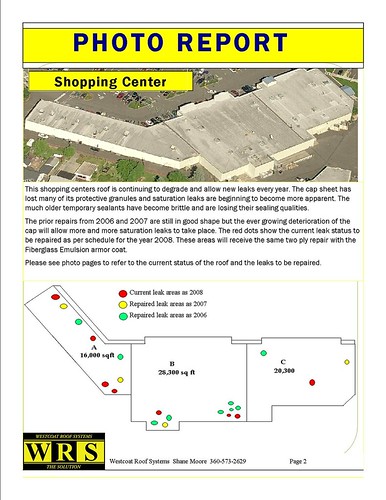
Roof service History by roofershane

Also, liability insurance for commercial roofing is more epensive along with a larger bond is needed for a commercial roofing work which will make it not cost effective for a commercial roofing contractor to complete residential roofing jobs.

Still an additional factor is the fact that commercial jobs can run on tighter time period for just about any number of reasons, requiring an industrial contractor to employ a larger crew or crews which again makes smaller jobs less profitable for them.


Difference Between Commercial Roofing and Residential Roofing

Did you know that the roof of a building has a huge impact on the whole structure itself? Damage caused to roofs due to natural or other disasters causes a considerable loss of property everywhere. The type of materials accustomed to construct the rooftop that ought to be sturdy and long-lasting, the manner in which the roof has been installed as well as its timely maintenance are extremely crucial. There are two kinds of roofs which are utilized on all of the buildings that people see around us: commercial and residential. Although it may seem that commercial roofing is done just for businesses or offices and residential roofing is done for apartments and houses, the truth is the differences are much more complex than that.


corrugated roofing by jpignanello

Residential roofing is usually completed by just one hired contractor but commercial roofing usually takes an entire team to complete the job. This is because a commercial roof is commonly larger in terms of square feet than the usual residential roof.
Commercial roofs need to be made carefully keeping the nature and purpose of the building in your mind. For example, if there is a restaurant within the building then external components like ventilation systems, smoke stacks and pipes is going to be required. Residential roofs tend not to have such components other than a chimney or two at the most.
Commercial roofs tends to be flat in design to support further changes at a later period, whereas most residential roofs have peaks along with other architectural features like roof gardens.
Commercial roofing is much more expensive than residential roofing because of the special tools, materials and safety equipment that are needed onsite. Usually the patching or maintenance work is done in segments unlike for a residential roof where the repair or replacement work could be carried out a short while. This really is one more reason why the gear used for residential roofs is usually smaller and less expensive too.
Commercial roof installations take a extended period to complete in comparison to residential roof installations and therefore are usually constructed in large sections. In this phase however, you should make sure that there are no leakages, cracks or any other visible deterioration signs as it can certainly cause considerable harm to the whole building.
It is important to install the right roof for any building based on its purpose. Make sure that you hire a construction company that uses first class materials and has the best equipment for the job or your investment may turn to be a huge loss later.


Commercial Roofing Contractors: How to purchase a Qualified Commercial Roofing Company

If a clients are seeking to have work done on its roof, you should work with commercial roofing contractors that have a keen understanding of any special needs that a business might have. For example, a roofing job can often be disruptive for that operation of economic as always. For this reason, it might be essential for the company to become temporarily turn off, or for the roofing to take place after business hours have ended. A roofer that understands these needs can function plus a business in order to make certain these types of issues are minimized.


Sherriff-Goslin Art-Loc Commercial Roof by Sherriff-Goslin Roofing Contractors

The first thing that a company should do when it's trying to find commercial roofing contractors is to find out who other businesses in the area are working through. Obviously, this information will 't be helpful if it comes as an indicator from competitors, but you will find circumstances by which it is not too hard to locate this information from suppliers or retailers. Since roofing is not an industry-specific service, this post is easily available.

It's a wise decision for just about any business to obtain in touch with a minimum of three commercial roofing contractors to make bids on the price. In this manner, the company can often obtain a better price. It's also important to make sure that each one of the roofing contractors is licensed and bonded. This information are available by getting touching their state contractor's board. This also makes it possible to determine if there have been any claims filed against the company in the past.

When examining bids, it is just as vital to look at what services are now being offered and which products is going to be used as it is to check out the total cost. The prices can differ quite drastically, but as tempting as possible to go for the lowest bid, this is not always your best option. Oftentimes, more costs now means fewer costs in the long run as a result of an undesirable roofing job. To further investigate the caliber of the job, it's a good idea to check on using the Bbb in order to see if the business continues to be accredited, and when it has not, to at least see what its rating is.


Picking out a Commercial Roofer


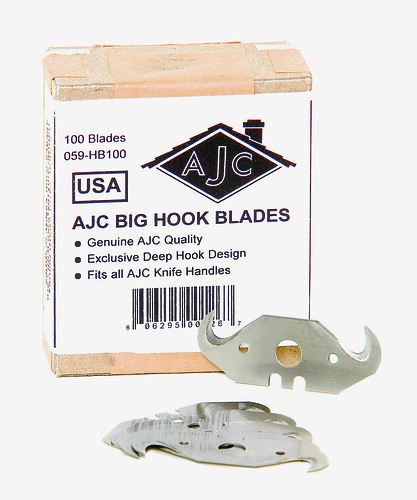
059-HB100 Bulk Pack of 100 Individual Hook Blades  by AJC Tools

When you are looking for a roofer for your commercial roofing project you need to look for a contractor who understands the special needs of a commercial roofing project. For example it can be harder to operate on the business during business hours so either the company needs to be shut down for that repair or replacement or even the job needs to be done after conventional business hours. Is the roofer you are considering to do the job willing and able to operate around your schedule constrictions that might involve working weekends or evenings?

When you begin your search for a roofing contractor not only do you need to answer those questions but you also want to find someone which will do a top quality job without a lot of time delays. Going about finding someone can seem as an obstacle by itself but there are several methods to make the search easier.

Ask people around you for referrals and try to find a minimum of three contractors to give you written bids in your job. Before you go any more you have to make sure that the contractors you are considering are fully licensed and bonded. An easy search using the state contractor's board will verify in case your roofer is licensed and if there are any past judgments or claims against their license.

Once you select 3 or 4 roofers to put bids, you should get ready for that bids to be widely varied. Roofers will have brand preferences that will vary and could element in more or less compared to next guy for a labor estimate. The more detailed an itemized bid may be the more helpful it will be for you to see in which the cost are going to be incurred. Don't, however, pick a roofer based solely about the bid price. Any low ball bids might be tempting to take, but if they are low due to poor quality workman ship it might not be worthwhile in the end.

As they say, you generally get that which you purchase, if you can afford a mid-priced bid it's always smart to go up in your price range instead of down. You also should select your roofer depending on how professional these were and how comfortable you anticipate you will be dealing with them.

Finally your cost will vary depending on which kind of roofing material you select along with the cost to haul your old roof to the landfill. If you are looking for places to chop corners in your roof, instead of cutting labor cost you might want to ask about metallic roof option. Metal roofs can be cost effective and efficient which makes them overall money savers for that long run, as well as on commercial buildings they can be very low maintenance. Plus given that they can be put on top of a current roof, you don't have to possess the old one removed and hauled away, which can make a large effect on your cost.

Choosing a comerical roofing company nearer your home, does not have to become a struggle. For more information, visit http://www.vancouverroofers.net